Mount Kinabalu is located in the state of Sabah, East Malaysia. At 4,095 metres above sea level, it is the highest mountain in the country and one of the most accessible high-altitude climbs in Southeast Asia.
Mount Kinabalu is managed under a regulated system by Sabah Parks, with strict controls on daily climber numbers, guide-to-climber ratios, accommodation allocation, and safety procedures. All climbers are required to climb with licensed mountain guides, stay overnight at designated rest houses, and follow park regulations throughout the climb.
The mountain’s appeal lies in its accessibility rather than technical difficulty. It does not require rope climbing, ice equipment, or prior mountaineering experience. However, it should not be considered an easy climb. The altitude, long ascent, cold summit conditions, and weather variability present real physical and logistical challenges.
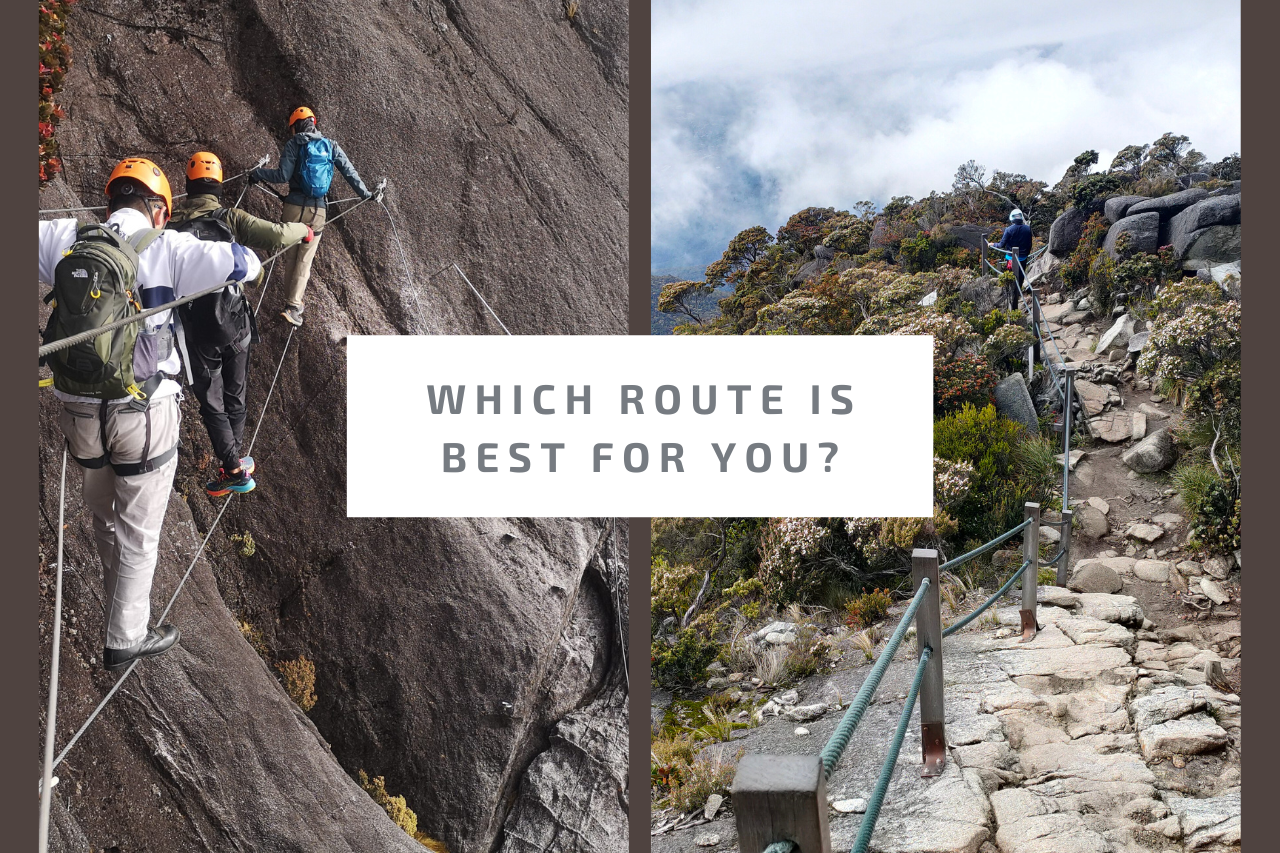
There are two officially recognised climbing options for Mount Kinabalu:
- The Normal Climb
- The Via Ferrata routes, which include Walk the Torq and Low’s Peak Circuit
Both routes follow the same primary trail on Day 1 but differ significantly in experience, physical demand, and technical exposure on summit day.
Overview of Mount Kinabalu Climbing Routes
Mount Kinabalu has a single main access trail beginning at Timpohon Gate. All climbers ascend this trail on the first day regardless of route choice. The difference between the Normal Climb and Via Ferrata applies primarily to summit day activities and technical involvement, not the approach trek.
Both options require:
- Approved climbing permits
- Licensed mountain guides
- Overnight accommodation at Panalaban
- Compliance with park safety and timing regulations
The key decision factor is not whether you can reach the summit, but how you want to experience the summit section.
1. Mount Kinabalu Normal Climb
Route Overview and Difficulty Profile
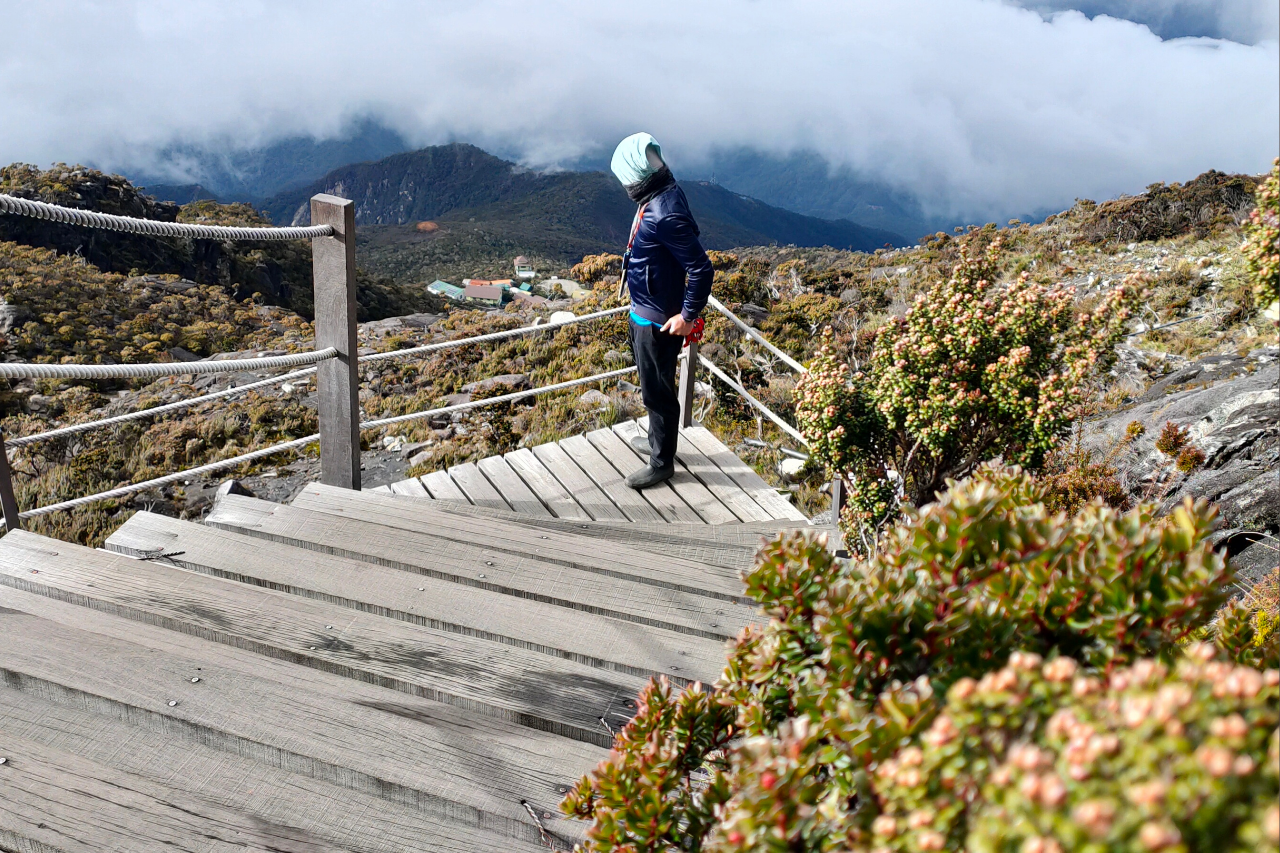
The Normal Climb is the standard route chosen by most climbers. On Day 1, climbers trek from Timpohon Gate (1,866 metres) to Panalaban (approximately 3,272 metres). The distance is about six kilometres, with a consistent uphill gradient.
The trail consists of:
- Stone steps
- Forest paths
- Boardwalk sections
- Open granite slopes near higher elevations
On Day 2, the summit push begins early in the morning, typically around 2:00 a.m. Climbers ascend exposed granite terrain using fixed safety ropes installed by the park. These ropes are for balance and stability rather than technical climbing.
The Normal Climb is physically demanding but technically simple. No climbing skills are required.
Physical Fitness Expectations
Climbers should be able to:
- Walk uphill continuously for several hours.
- Manage uneven steps and prolonged stair-like terrain.
- Maintain a steady pace at altitude.
Training is recommended but does not need to be specialised. Common preparation includes:
- Stair climbing.
- Hill walking.
- Light endurance training.
This route is suitable for climbers with average fitness levels who are in good general health.
Technical Skills Involved
No technical or mountaineering skills are required. The use of fixed ropes does not require knowledge of harnesses or carabiners. Guides provide instructions where necessary.
Safety Systems and Guide Support
All climbers are accompanied by licensed mountain guides as mandated by park regulations. Guides manage:
- Pace control
- Safety checks
- Weather-related decisions
- Turnaround timing
Emergency protocols are established, and guides are trained in mountain safety and evacuation procedures.
Intended Climber Profile
The Normal Climb is suitable for:
- First-time mountain climbers
- Climbers with limited high-altitude experience
- Older climbers with adequate fitness
- Individuals who prefer minimal exposure to heights
Nature of the Experience
The experience is primarily a long-distance uphill trek followed by a short summit ascent. Mental demand is moderate and relates mainly to fatigue management rather than fear or technical complexity.
2. Mount Kinabalu Via Ferrata (Walk the Torq and Low’s Peak Circuit)
Route Overview and Difficulty Profile
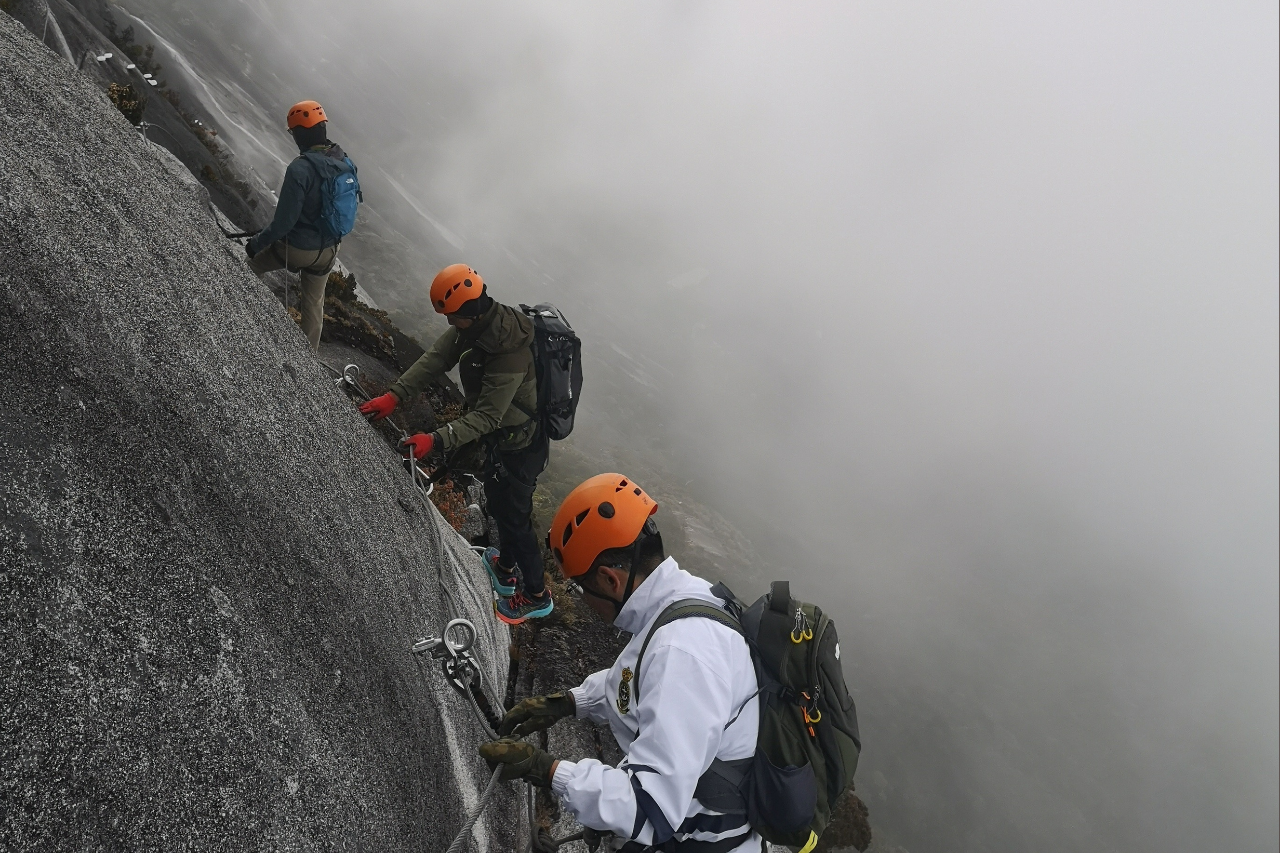
Via Ferrata routes introduce fixed steel structures into the summit section. These include:
- Steel cables.
- Vertical ladders.
- Suspension bridges.
- Anchored footholds.
There are two Via Ferrata options:
1. Walk the Torq
- Shorter duration
- Lower overall exposure
- Suitable for climbers new to Via Ferrata
2. Low’s Peak Circuit
- Longer route
- Greater exposure and elevation changes
- Higher physical and mental demand
Both routes operate near Panalaban and are completed during the summit window.
Physical Fitness Expectations
Via Ferrata requires higher physical capacity than the Normal Climb. Climbers must manage:
- Prolonged activity at altitude
- Upper body engagement
- Balance on narrow structures
Fatigue is a key factor because Via Ferrata is done after the first day’s ascent.
Technical Skills Involved
No prior Via Ferrata experience is required. However, climbers must be able to:
- Use harness systems correctly
- Clip and unclip carabiners under instruction
- Follow safety procedures consistently
A full briefing and equipment check are conducted before the route begins.
Safety Systems and Professional Support
Via Ferrata routes operate under:
- Strict daily quotas.
- Weight and age limits.
- Dedicated Via Ferrata guides.
- Mandatory safety equipment.
Routes may be closed due to weather, wind, or safety assessments. These decisions are made daily based on actual mountain conditions.
Intended Climber Profile
Via Ferrata is suitable for:
- Physically fit climbers.
- Individuals comfortable with heights.
- Climbers seeking additional challenges.
- Those with strong focus and coordination.
It is not recommended for climbers with fear of heights or limited upper body strength.
Nature of the Experience
Via Ferrata combines physical exertion with technical movement. Mental demand is higher due to exposure and the need for continuous attention to safety systems.
Practical Comparison Based on Climber Profiles
| Factor | Normal Climb | Via Ferrata |
| First-time climbers | Suitable | Conditional |
| Technical elements | None | Moderate |
| Exposure to height | Low | High |
| Physical demand | Moderate to high | High |
| Mental demand | Fatigue-based | Fatigue + focus |
| Summit day duration | Shorter | Longer |
In practice, climbers who prioritise completion and comfort tend to choose the Normal Climb. Climbers who prioritise challenge and structured adventure typically select Via Ferrata.
Local Operational Insight: Permits, Conditions, and Preparation
Mount Kinabalu operates under a daily permit quota system. Availability is limited, and bookings must be secured in advance. All climbers must climb with licensed guides and stay at approved accommodation.
Weather conditions vary throughout the year. Rain, wind, and temperature drops are common, particularly during summit hours. Equipment selection should prioritise:
- Proper hiking footwear with good grip.
- Layered clothing for temperature changes.
- Controlled pacing rather than speed.
- Training should focus on endurance rather than strength alone.
Role of a Licensed Climbing Package
As a Sabah-based licensed operator, Remarkable Borneo Travel and Tours Sdn Bhd arranges Mount Kinabalu climbing packages that comply fully with park regulations. Typical inclusions are:
- Climbing permits and conservation fees.
- Licensed mountain guides.
- Registered accommodation at Panalaban.
- Meals during the climb.
- Ground transfers where applicable.
Using a licensed operator ensures:
- Proper permit handling.
- Correct guide allocation.
- Compliance with safety and timing rules.
- Coordination in response to weather or operational changes.
This structure supports a predictable and well-managed climb.
Choosing the Appropriate Route
The choice between the Normal Climb and Via Ferrata should be based on fitness level, comfort with heights, and personal expectations, not perceived difficulty alone.
Choose the Normal Climb if your priority is a straightforward ascent with minimal technical exposure. Choose Via Ferrata if you are physically prepared, comfortable with height exposure, and want an added technical component.
Both routes operate within the same regulatory and safety framework. The difference lies in the level of physical and mental engagement during the summit phase.
Conclusion
Choosing between the Mount Kinabalu Normal Climb and Mount Kinabalu Via Ferrata is not a question of which route is better, but which route is more appropriate for your condition, expectations, and comfort level.
The Normal Climb is suitable for climbers who want a non-technical ascent that focuses on endurance, pacing, and altitude management. It is the preferred option for first-time climbers, those with limited exposure to heights, and individuals who want a straightforward summit attempt within a structured and controlled environment.
The Via Ferrata routes are designed for climbers who are physically prepared, comfortable with height exposure, and willing to engage with safety systems and technical movement while fatigued. Although the safety infrastructure is robust, the route demands higher physical output and sustained mental focus, especially at altitude.
Both options operate under the same permit system, guide requirements, and park regulations. Weather conditions, daily safety assessments, and guide decisions apply equally to all climbers, regardless of route choice. Reaching the summit depends on preparation, pacing discipline, and adherence to safety guidance rather than route selection alone.
From a local operator’s perspective, climbers who choose a route that aligns with their real capabilities consistently have smoother climbs, better energy management, and fewer safety-related issues. A clear understanding of each route before booking is the most reliable way to ensure a controlled, well-managed Mount Kinabalu climbing experience.