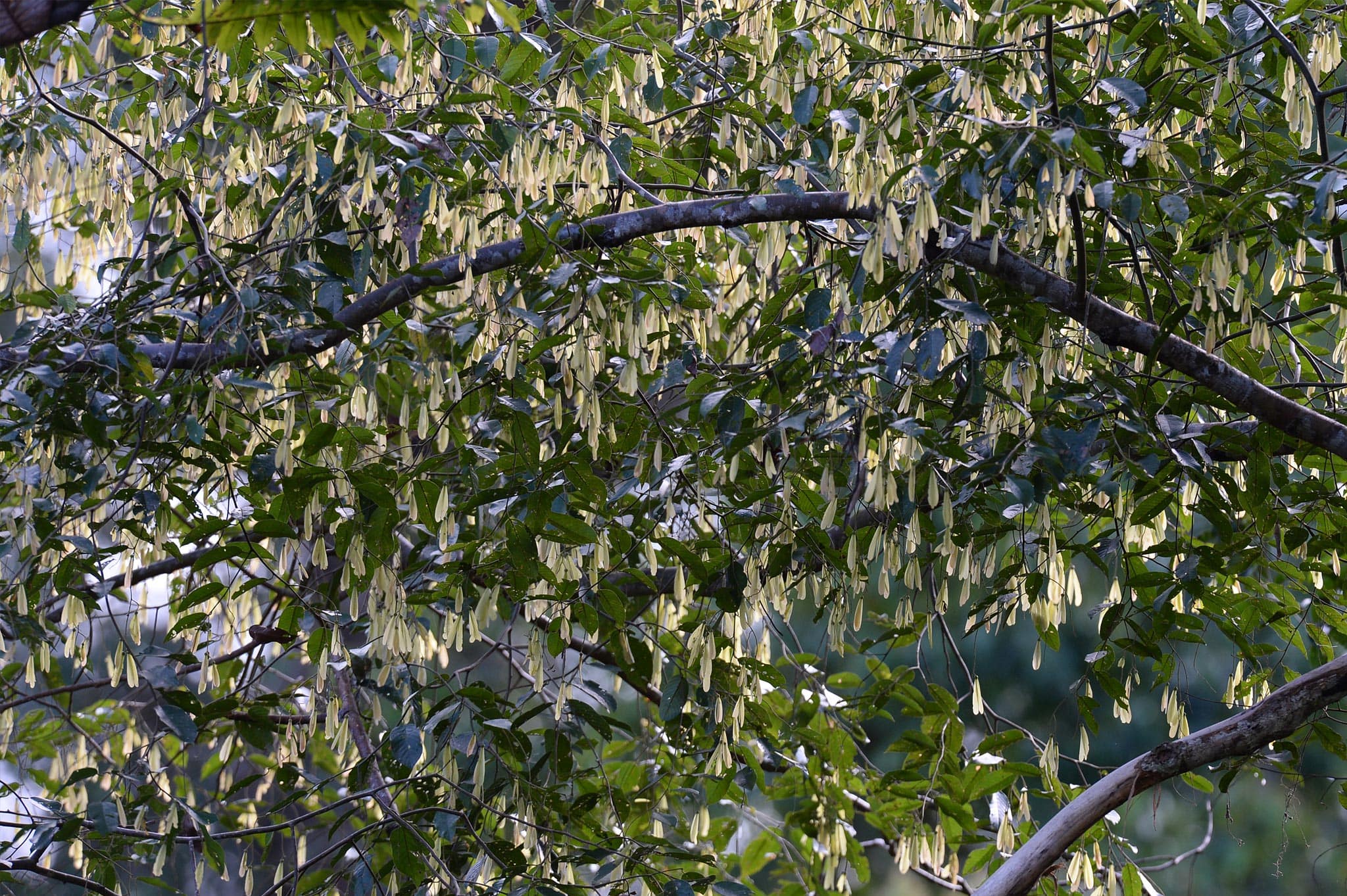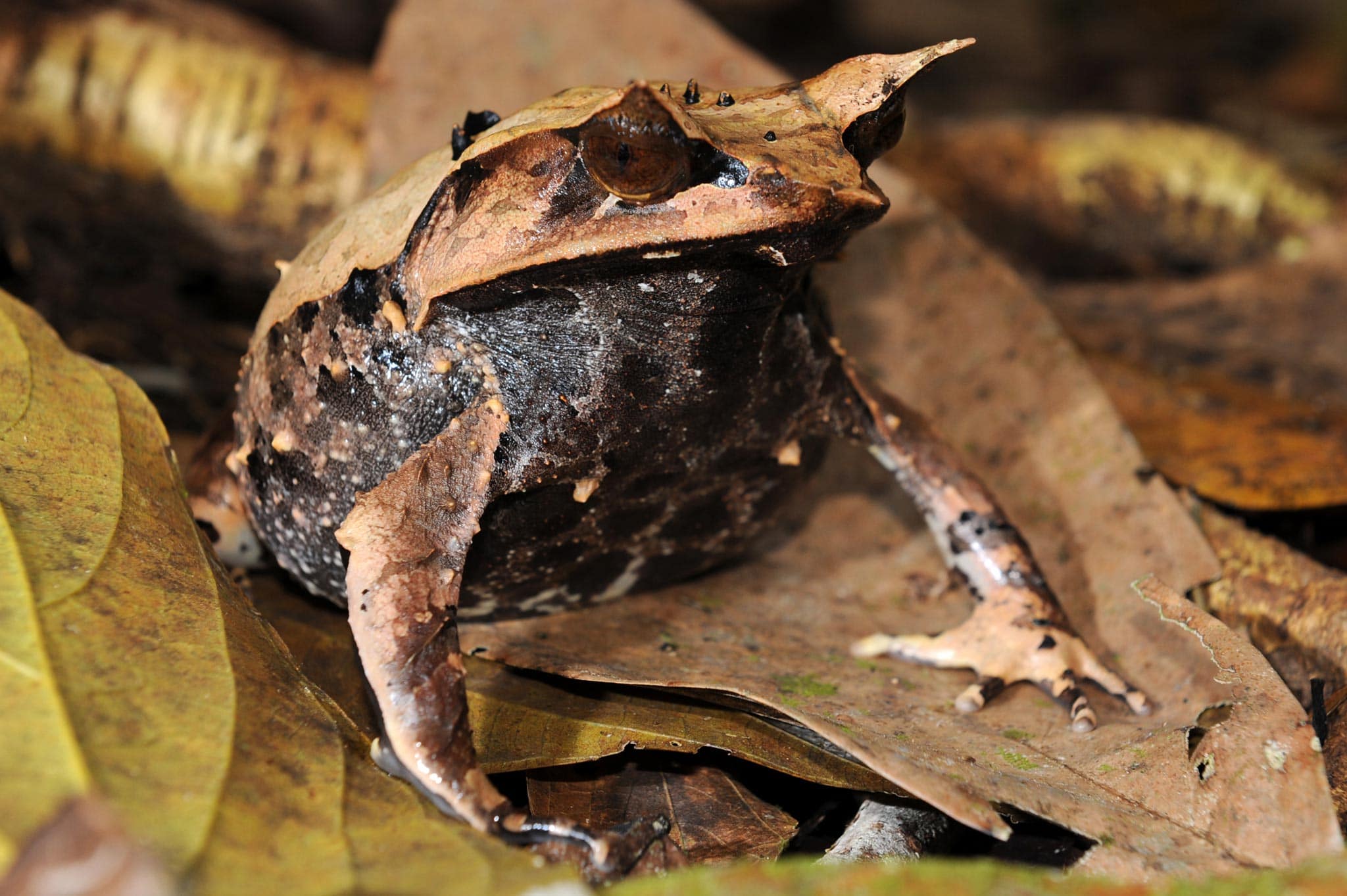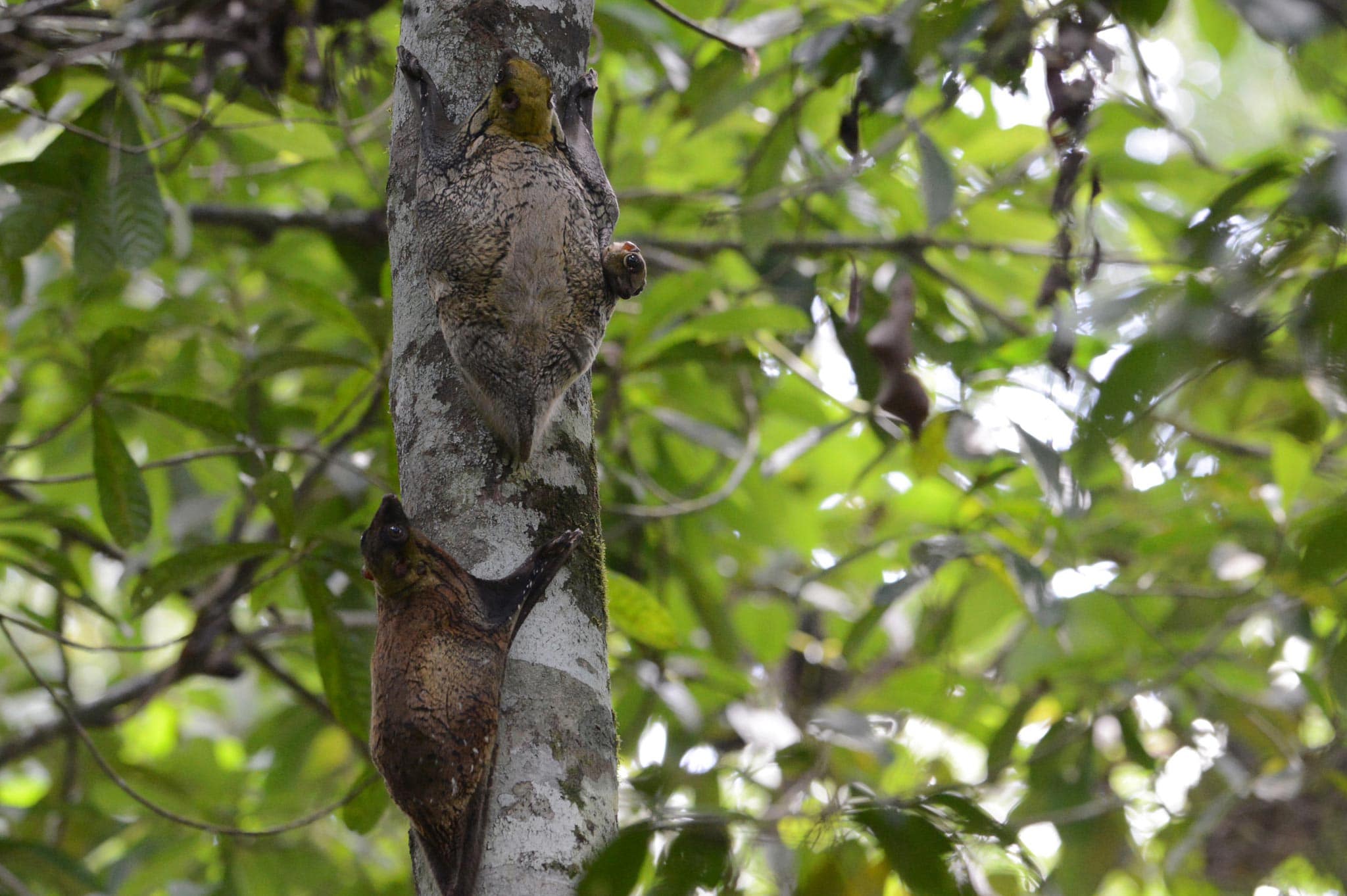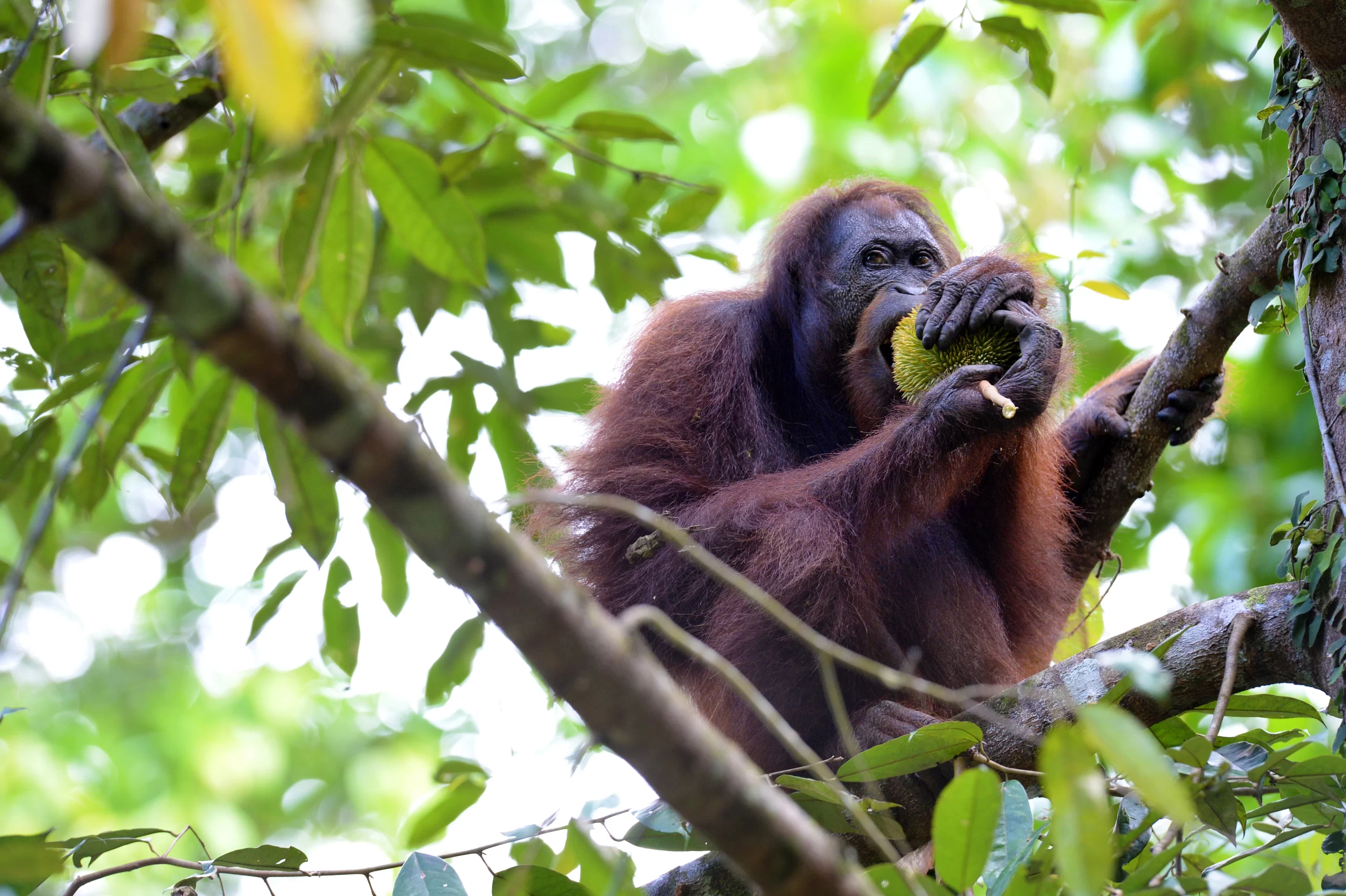
Birdwatching in Danum Valley offers an opportunity to experience one of Southeast Asia’s most biologically significant tropical rainforests. Located within the Danum Valley Conservation Area in eastern Sabah, Malaysian Borneo, this protected forest is internationally recognised for its exceptional biodiversity and long-term conservation research. Covering approximately 438 square kilometres of largely undisturbed lowland dipterocarp rainforest, it provides habitat for more than 300 recorded bird species, alongside orangutans, clouded leopards, pygmy elephants, and countless other wildlife.
For birdwatchers, wildlife photographers, and naturalists, Danum Valley represents one of the best places for birding in Sabah. Ancient forest canopies, winding rivers, forest trails, and rich understory vegetation create diverse habitats that support both widespread Southeast Asian birds and species found nowhere else except Borneo.
However, successful birdwatching in Danum Valley requires realistic expectations. Birds remain wild animals, and sightings are influenced by weather, season, forest conditions, time of day, habitat, and a measure of patience and luck. Some species reveal themselves only briefly, while others are more often heard than seen.
Rather than promising guaranteed sightings, Danum Valley rewards careful observation. Every walk through the rainforest presents different possibilities, making each visit a unique experience.
Why Danum Valley Is One of Sabah’s Best Birdwatching Destinations?
Danum Valley Conservation Area is renowned for its remarkably intact rainforest ecosystem. Unlike forests affected by agriculture or urban development, much of Danum Valley has remained protected for decades, allowing wildlife populations to persist within mature tropical forests.
Towering dipterocarp trees exceeding 70 metres in height form multiple forest layers, each supporting different bird communities. The forest floor shelters pittas, pheasants, and trogons, while the mid-canopy hosts broadbills, monarchs, and sunbirds. High above, hornbills, raptors, and treeswifts patrol the canopy.
This habitat diversity makes Danum Valley suitable for both experienced birdwatchers searching for elusive specialties and newcomers hoping to observe tropical rainforest birds for the first time.
Local guides add considerable value by recognising bird calls, locating movement within dense vegetation, and interpreting behaviours that visitors might otherwise overlook.
What Birdwatchers Can Realistically Expect?
One of the most rewarding aspects of Sabah birdwatching is that every outing is different. Visitors should remember several important realities:
- Birds are wild and cannot be predicted.
- Early morning, shortly after sunrise, generally offers the highest level of bird activity.
- Late afternoon may also produce rewarding observations.
- Many rainforest birds announce their presence through calls before becoming visible.
- Dense vegetation often limits viewing distances.
- Rainfall, wind, and changing weather influence bird behaviour.
- Different trails, streams, and forest edges attract different species.
- Joining an experienced guide often increases the likelihood of finding difficult species.
Even skilled birdwatchers occasionally spend hours searching for a single target species. Conversely, unexpected encounters often occur when least anticipated. So, patience remains one of the most valuable pieces of equipment.
Birdwatching in Danum Valley: Birds You May See in Danum Valley
The birds of Danum Valley include widespread Southeast Asian species alongside several of Borneo’s most sought-after endemic birds. The following species are among those birdwatchers may encounter.
1. Great Argus (Argusianus argus)
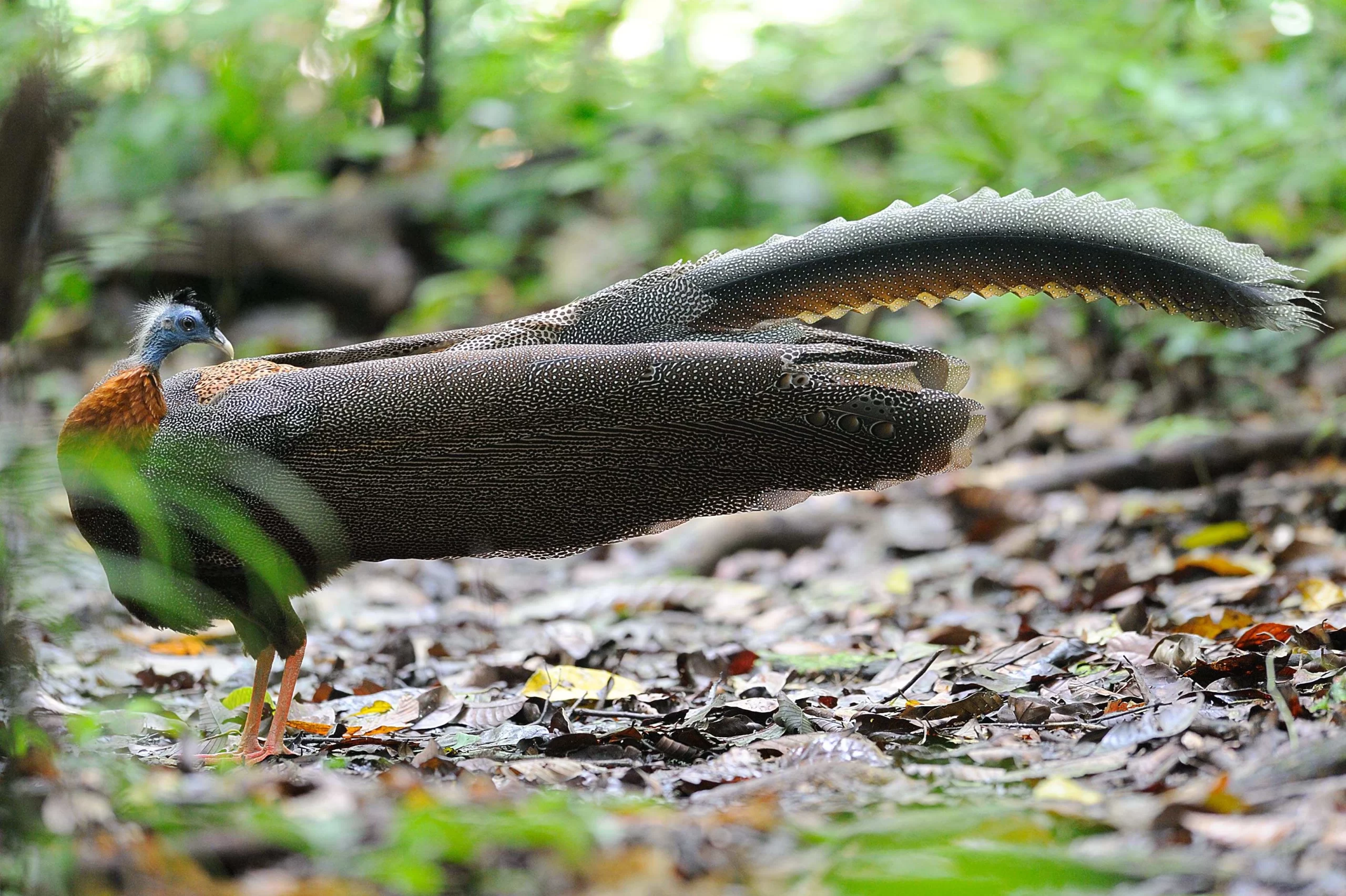
The Great Argus (Argusianus argus) is one of the most spectacular ground-dwelling birds found in the rainforests of Southeast Asia. This large pheasant is renowned for the male’s exceptionally long tail and elongated wing feathers, which are decorated with striking eye-like markings (ocelli). During courtship, the male spreads these ornate feathers into an impressive fan while displaying at carefully maintained courts on the forest floor.
The species occurs throughout the Sundaland region, including Peninsular Malaysia, Sumatra, and Borneo, making it endemic to Sundaland rather than Borneo alone. It is currently classified as Near Threatened by the IUCN, with habitat loss remaining its greatest conservation challenge.
In Danum Valley, birdwatchers are often more likely to hear the male’s deep, resonant calls echoing through the rainforest before catching sight of the bird itself. Great Argus inhabits mature lowland dipterocarp forest and spends much of its time walking quietly across the forest floor in search of fallen fruits, seeds, insects, snails, and other small invertebrates.
Early morning walks along quieter trails, particularly near known display courts, offer the best opportunity to encounter this elusive species, although patience is essential as sightings are never guaranteed.
2. Banded Pitta (Hydrornis schwaneri)
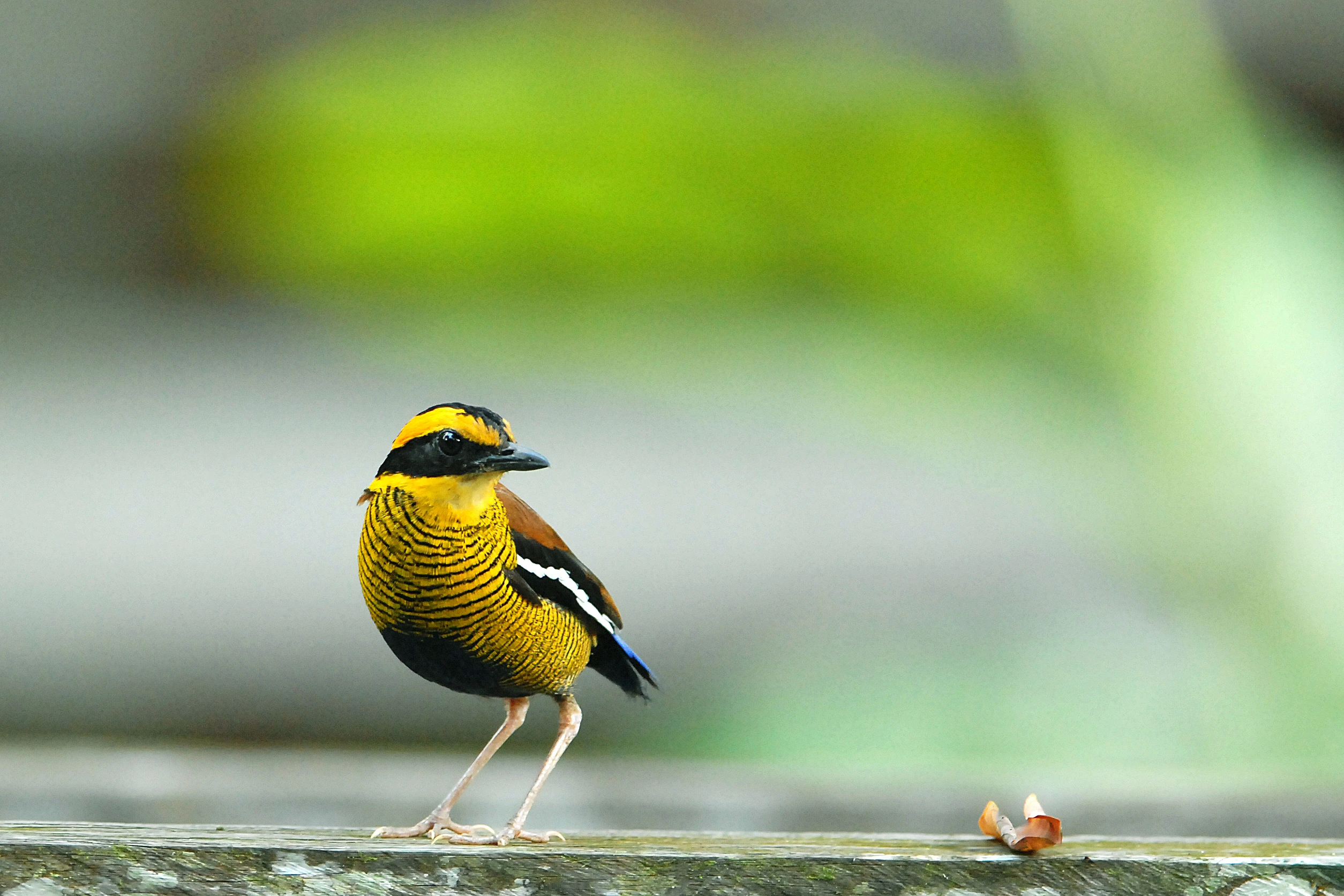
The Banded Pitta (Hydrornis schwaneri) is one of the most colourful forest-floor birds found in Danum Valley. It is recognised by its buff-orange head, black facial mask, bright yellow underparts with bold black barring, chestnut wings, and blue rump. This species is endemic to Borneo and is currently classified as Least Concern by the IUCN. It inhabits lowland and hill rainforests, where intact forest remains essential for its survival.
Naturally shy and elusive, the Banded Pitta spends much of its time searching the forest floor for insects, earthworms, snails, and other small invertebrates beneath dense vegetation. Birdwatchers often hear its clear whistling call before catching a glimpse of the bird. In Danum Valley, patient visitors may occasionally see one hopping through the leaf litter or pausing briefly along quiet forest trails, particularly during the early morning.
3. Cinnamon-rumped Trogon (Harpactes orrhophaeus)
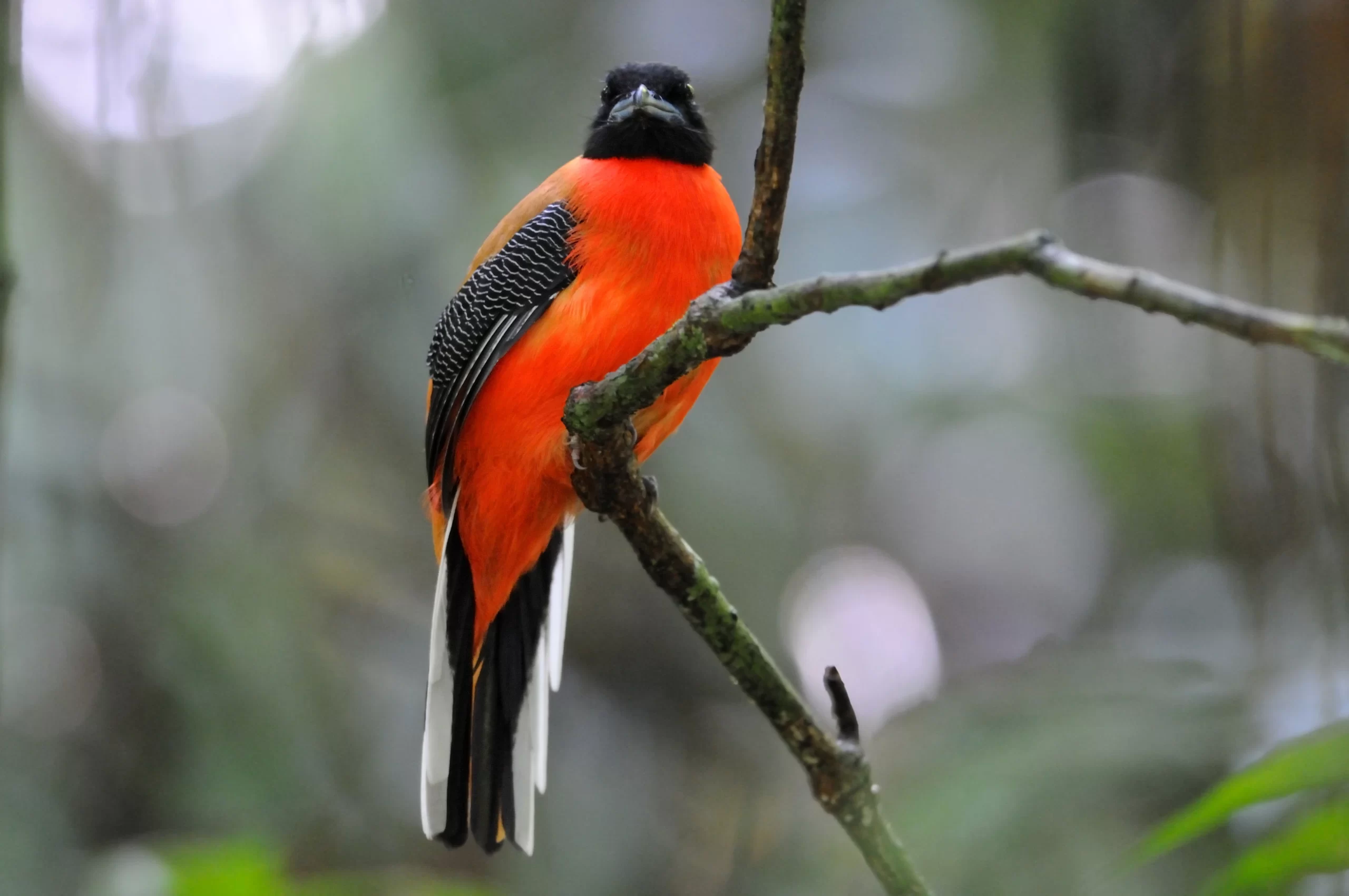
The Cinnamon-rumped Trogon (Harpactes orrhophaeus) is one of the most striking Borneo endemic birds found in Danum Valley. This medium-sized trogon is recognised by its black head and throat, bright scarlet-red underparts, finely barred wings, and distinctive cinnamon-coloured rump, which gives the species its name. Found only on the island of Borneo, it is currently classified as Least Concern by the IUCN, although conserving its mature rainforest habitat remains important.
Like many trogons, it spends long periods perched quietly in the forest understorey before making short flights to catch insects or feed on small fruits. Its calm behaviour and preference for shaded forest can make it easy to overlook despite its vibrant colours.
4. Giant Pitta (Hydrornis caeruleus)
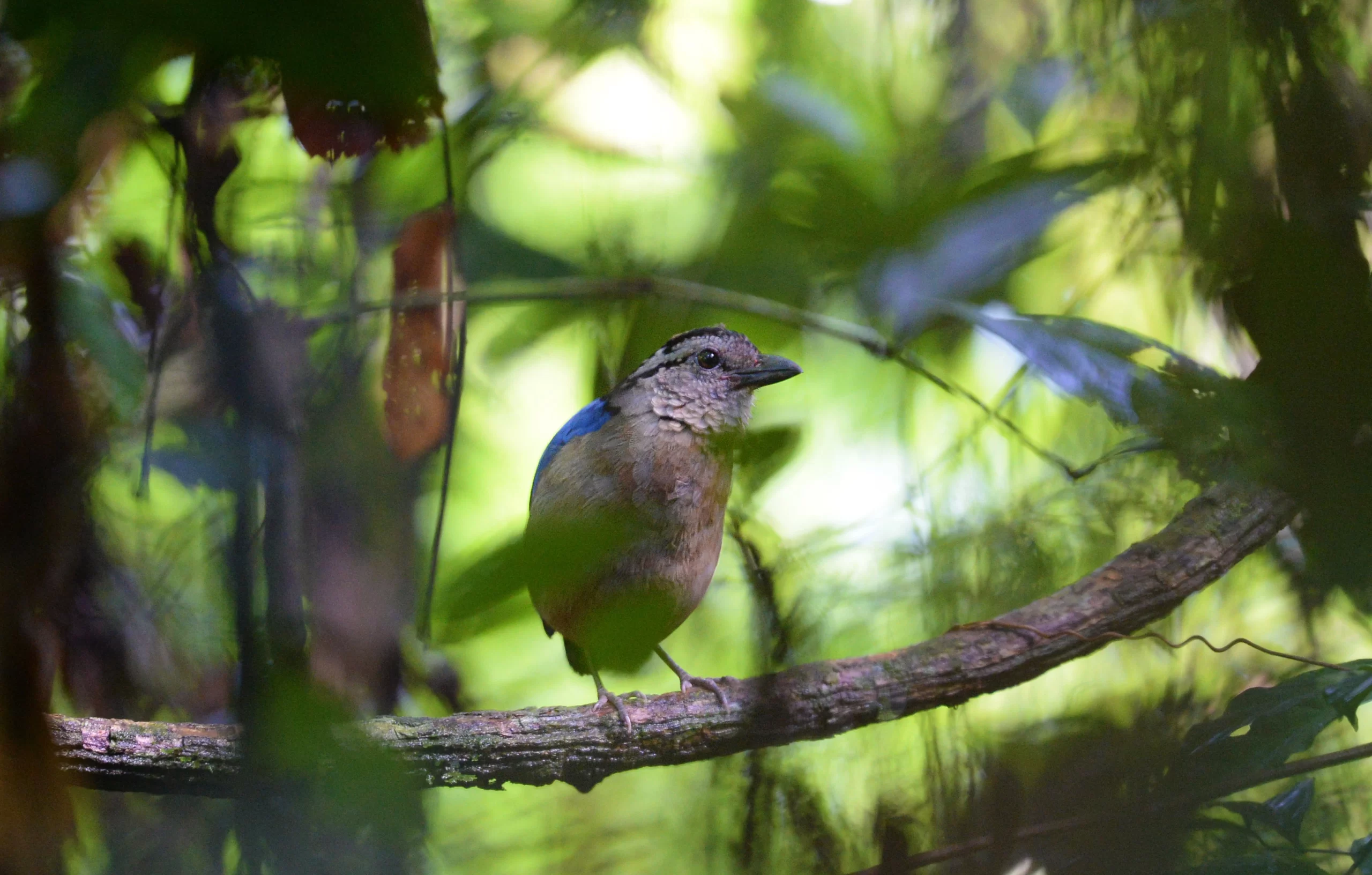
The Giant Pitta (Hydrornis caeruleus) is one of the most sought-after birds by birdwatchers visiting Danum Valley. It is the largest pitta found in Borneo and is recognised by its vivid blue underparts, chestnut crown, bold black facial markings, and olive-green upperparts. Despite its name, the species is not restricted to Borneo, occurring also in Peninsular Malaysia, southern Thailand, and Sumatra. It is currently classified as Near Threatened, mainly because of the continuing loss of lowland rainforest across its range.
A shy and elusive bird, the Giant Pitta spends much of its time foraging on the forest floor beneath dense vegetation, feeding on earthworms, insects, and other small invertebrates. It is more often heard than seen, with its loud, far-carrying calls echoing through the forest. In Danum Valley, sightings are uncommon, but early morning walks with experienced local guides offer the best chance of encountering this remarkable rainforest species.
5. Rhinoceros Hornbill (Buceros rhinoceros)
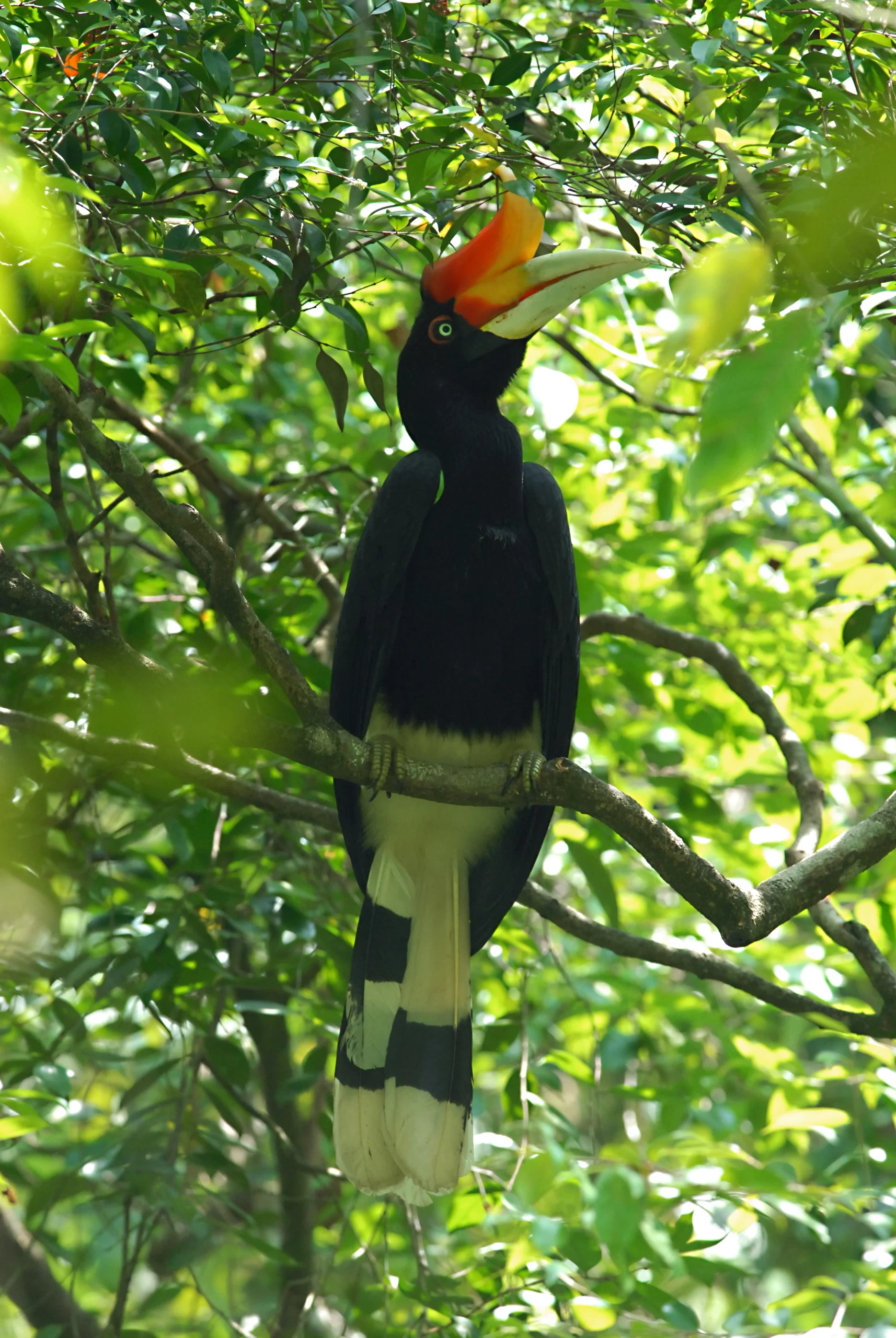
The Rhinoceros Hornbill (Buceros rhinoceros) is one of the most iconic birds of Borneo and an important symbol of Southeast Asia’s tropical rainforests. It is easily recognised by its large ivory-yellow bill, striking orange-red casque, glossy black plumage, and white tail marked with a broad black band. The species is native to the Sundaland region, occurring in Peninsular Malaysia, Sumatra, and Borneo, and is currently classified as Vulnerable by the IUCN due to habitat loss and hunting.
Rhinoceros Hornbills inhabit mature lowland and hill rainforests, where they play a vital ecological role by dispersing the seeds of many forest trees, particularly figs. Although fruit makes up most of their diet, they also feed on insects and small vertebrates. In Danum Valley, Sabah, birdwatchers often see these impressive birds flying above the forest canopy or visiting fruiting trees.
6. Bornean Bristlehead (Pityriasis gymnocephala)
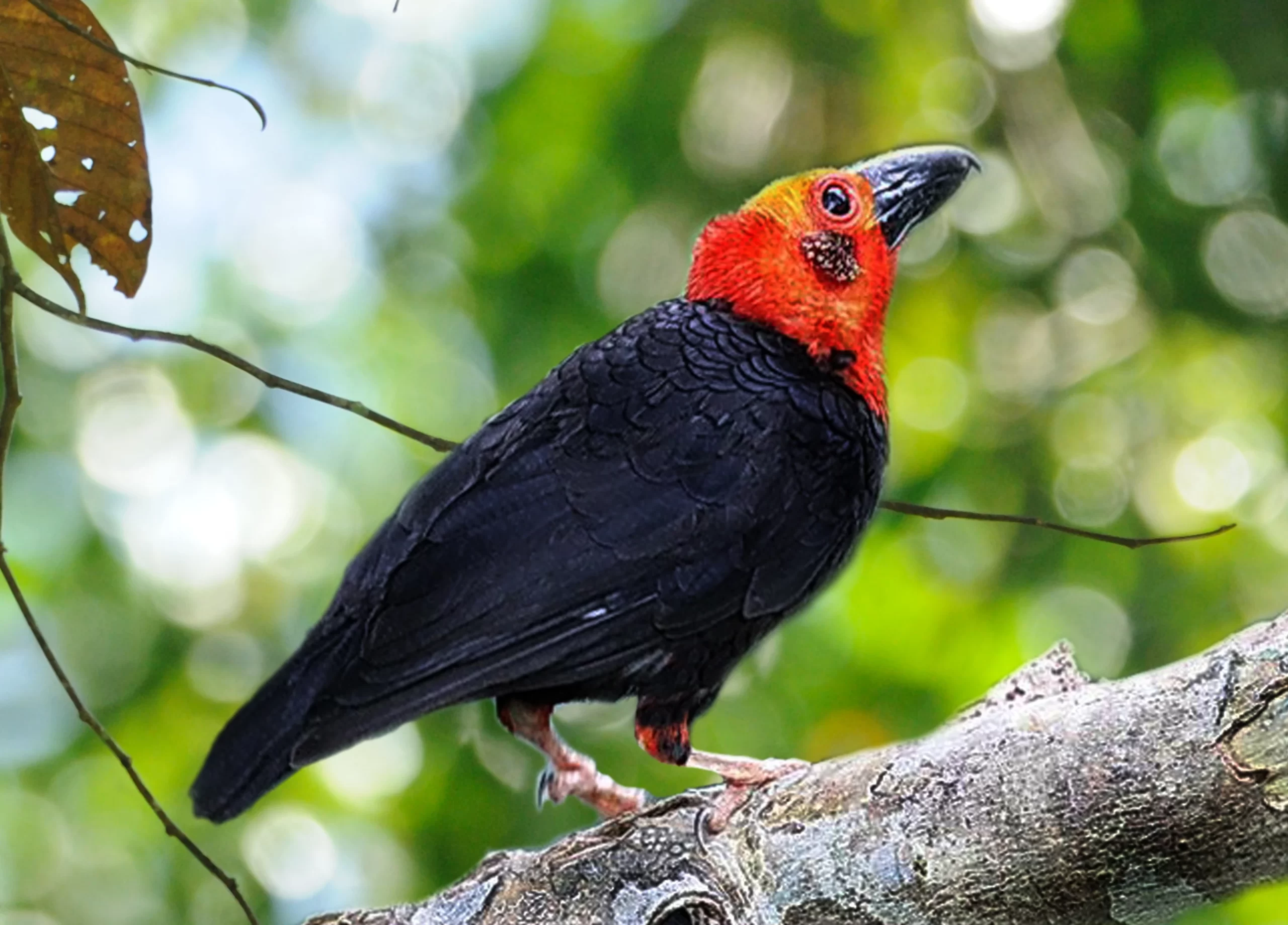
The Bornean Bristlehead (Pityriasis gymnocephala) is one of the most unusual birds found anywhere in Southeast Asia. Its glossy black body, bright red featherless head, and stiff facial bristles give it an unmistakable appearance. Even more remarkable, it is the sole member of the bird family Pityriasidae. The species is endemic to Borneo and is currently classified as Near Threatened.
Bornean Bristleheads usually travel in noisy family groups through the upper canopy, where they forage for insects and fruit. Their rapid movements often make them challenging to observe for extended periods. In Danum Valley, birdwatchers sometimes locate them by listening for their distinctive calls before scanning the canopy for brief but rewarding views.
7. Blue-banded Pitta (Erythropitta arquata)
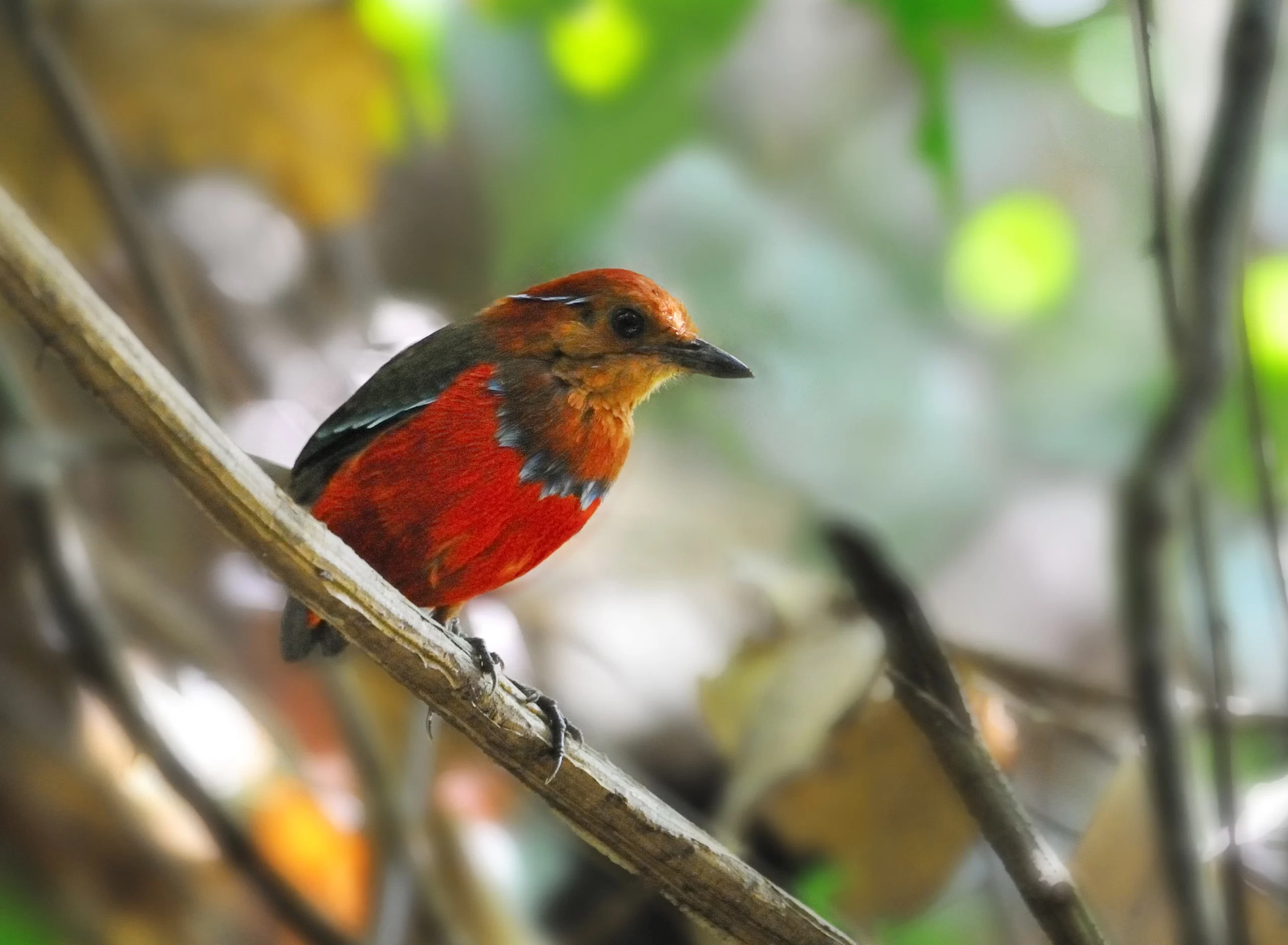
The Blue-banded Pitta (Erythropitta arquata) is one of Borneo’s most colourful and sought-after rainforest birds. It is recognised by its chestnut head, bright red underparts, striking blue breast band, and dark green upperparts. This beautiful species is endemic to Borneo and is currently classified as Near Threatened by the IUCN due to the continuing loss of lowland rainforest habitat.
The Blue-banded Pitta inhabits dense lowland rainforest, where it quietly searches the forest floor for insects, earthworms, snails, and other small invertebrates. Naturally shy and well camouflaged among the leaf litter, it is more often heard than seen. In Danum Valley, patient birdwatchers accompanied by experienced local guides may occasionally encounter this elusive species, particularly during the early morning when forest activity is at its highest.
Endemic Birds of Borneo Found in Danum Valley
An endemic species occurs naturally only within a particular geographic region. Bornean endemic birds are found only on the island of Borneo and nowhere else in the wild.
Danum Valley is home to several remarkable Bornean endemics, including:
- Giant Pitta (Hydrornis caeruleus)
- Blue-banded Pitta (Erythropitta arquata)
- Bornean Bristlehead (Pityriasis gymnocephala)
- Cinnamon-rumped Trogon (Harpactes orrhophaeus)
- Blue-headed Pitta (Hydrornis baudii)
These birds attract birdwatchers because observing them often requires visiting intact rainforest habitats that remain well protected. Conserving forests such as Danum Valley helps ensure these specialised species continue to survive despite increasing pressures on tropical ecosystems elsewhere across Borneo.
Best Time for Birdwatching
Birdwatching is rewarding throughout the year, although conditions vary. Early mornings generally provide the greatest bird activity as temperatures remain cooler and birds feed actively after dawn. Late afternoons can also be productive before sunset.
Rainfall occurs throughout the year in eastern Sabah. Brief showers are common and may temporarily reduce bird activity, although many species become active again once rain subsides.
During breeding periods, some birds vocalise more frequently, making them easier to locate by sound, though breeding timing differs among species. Trail conditions can become muddy following heavy rain, so waterproof footwear is advisable regardless of the season.
Rather than focusing on a single “best” month, visitors should plan around weather flexibility and maximise time spent in the forest.
Birdwatching Tips for First-Time Visitors
If this is your first birdwatching tour in Danum Valley, preparation can significantly improve your experience.
Bring:
- 8×42 or 10×42 binoculars
- Camera with a telephoto lens
- Extra batteries and memory cards
- Lightweight rain jacket
- Waterproof backpack cover
- Neutral-coloured clothing
- Comfortable hiking shoes
- Insect repellent
- Drinking water
While in the forest:
- Walk slowly.
- Pause regularly to observe movement.
- Listen carefully for bird calls.
- Avoid unnecessary conversation.
- Scan different forest levels from the ground to the canopy.
- Join an experienced local nature guide familiar with bird vocalisations and habitat preferences.
Often, hearing a bird before searching visually leads to more successful observations.
Wildlife Photography Tips
Photographing rainforest birds presents unique challenges because of low light and dense vegetation. Helpful techniques include:
- Use longer focal lengths to maintain a respectful distance.
- Increase ISO rather than relying on excessive flash.
- Select faster shutter speeds for active birds.
- Stabilise your camera whenever possible.
- Watch for natural perches used repeatedly by birds.
- Be patient rather than chasing subjects.
Avoid manipulating wildlife solely for photographs. Natural behaviour almost always produces more authentic and meaningful images.
Responsible Birdwatching Guidelines
Responsible tourism contributes directly to the long-term protection of wildlife in Danum Valley. Follow these principles:
- Maintain a respectful distance from birds.
- Never feed wildlife.
- Avoid excessive playback of bird calls.
- Never bait birds for photography.
- Stay on designated trails.
- Leave no rubbish behind.
- Give nesting birds additional space.
- Follow your guide’s instructions.
- Support conservation through responsible tourism operators and protected-area regulations.
Thoughtful behaviour allows future visitors to enjoy the same healthy rainforest ecosystem.
Conclusion
Birdwatching in Danum Valley combines exceptional biodiversity, ancient rainforest scenery, and the possibility of encountering some of Southeast Asia’s most remarkable birds. From the unmistakable Rhinoceros Hornbill soaring above the canopy to elusive Bornean endemics such as the Blue-headed Pitta and Bornean Bristlehead, the diversity of birdlife reflects the ecological importance of the Danum Valley Conservation Area.
For birdwatchers, wildlife photographers, and naturalists, Danum Valley represents one of the best places for birding in Sabah. Ancient forest canopies, winding rivers, forest trails, and rich understory vegetation create diverse habitats that support both widespread Southeast Asian birds and species found nowhere else except Borneo.
However, successful birdwatching in Danum Valley requires realistic expectations. Birds remain wild animals, and sightings are influenced by weather, season, forest conditions, time of day, habitat, and a measure of patience and luck. Some species reveal themselves only briefly, while others are more often heard than seen.
Rather than promising guaranteed sightings, Danum Valley rewards careful observation. Every walk through the rainforest presents different possibilities, making each visit a unique experience.
-> Click here to book your birdwatching tour in Danum Valley